
A sewer camera inspection before buying a house is the only way to see the condition of the pipe that carries everything from the house to the street. A standard home inspection won’t show it. Under InterNACHI’s home inspection standards, the inspector runs the sinks and tubs to check that they drain, but the inspection is visual and limited to accessible areas, so a cracked or root-filled line buried in the yard goes unseen. In Los Angeles that pipe becomes yours, every foot of it, the day escrow closes.
The report usually comes back with one line about it: “Recommend evaluation of the sewer line by a qualified contractor.” Most buyers aren’t sure whether that’s boilerplate or a warning.
In an older LA house, especially one built before plastic sewer pipe became common in the 1970s, treat it as a warning until a camera says otherwise.
What a Sewer Camera Inspection Actually Covers
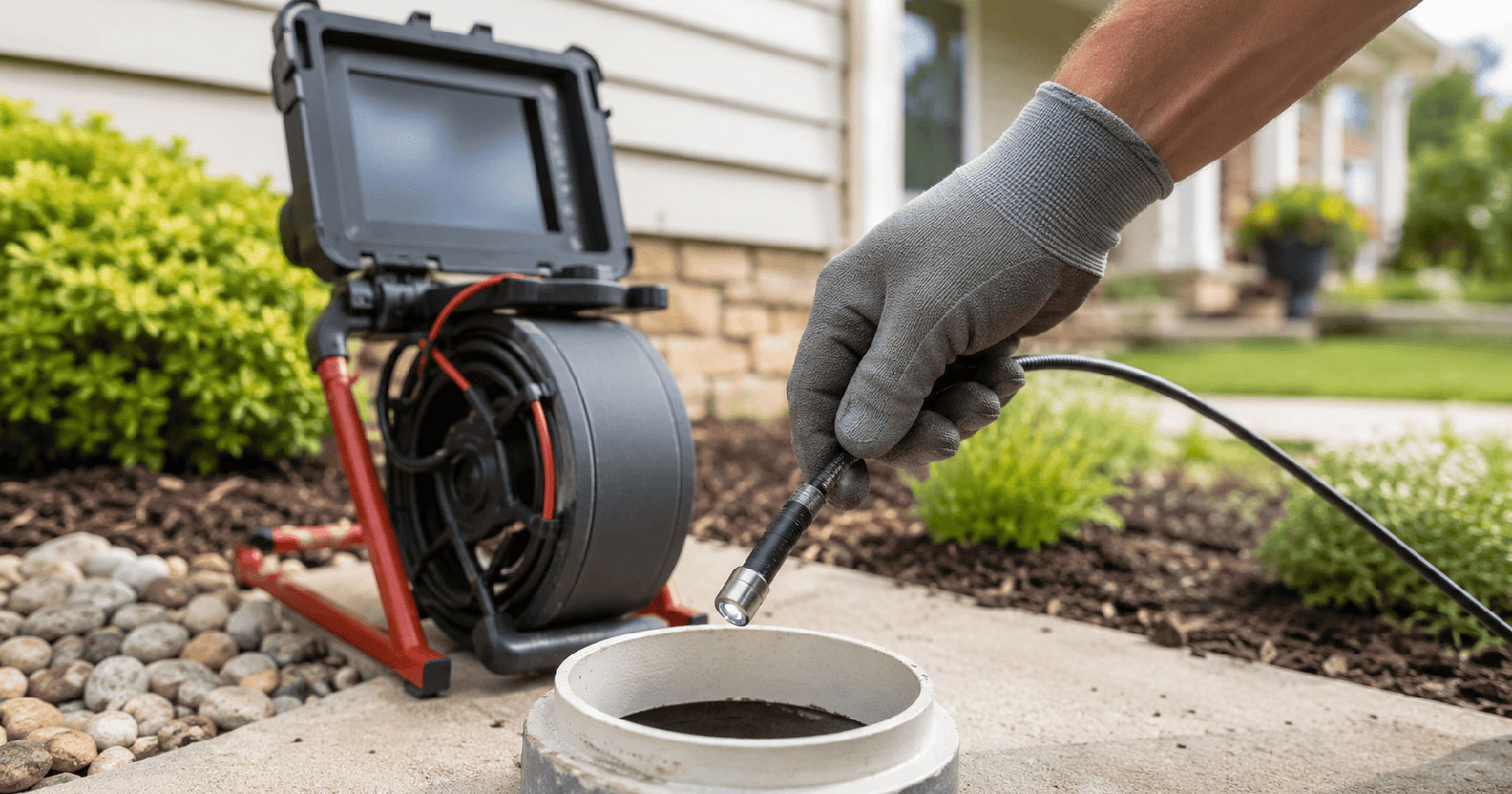
A sewer camera inspection, often called a sewer scope, covers the lateral: the pipe from the house to the city’s sewer main. InterNACHI’s sewer scope standard defines it as a video inspection from the house, at or near the foundation, to the municipality’s tap. A good report identifies what the pipe is made of, notes any defects, and says which parts couldn’t be inspected and why.
That last part matters. If the camera couldn’t get past a blockage at 40 feet, you haven’t seen the other 30.
We run the camera from the clean-out, the capped pipe usually near the foundation or along the path to the street. As it travels, a locator above ground tracks the depth and distance of anything worth noting, so a problem on the video can be pinned to a spot in the yard. Our camera inspection and sewer line service records the whole run and walks you through it before anyone talks about cost.
What the Pipe Is Made Of Matters
The material tells you a lot about what you’ll find, and LA’s housing stock covers every era.
| Material | Where it shows up | What the camera often finds |
|---|---|---|
| Clay | Older homes, especially under mature street trees | Roots at the joints, offset or cracked joints |
| Cast iron | Older homes, often under and near the house | Scale and corrosion narrowing the pipe, cracks |
| Orangeburg (fiber pipe) | Homes built roughly from the late 1940s to the early 1970s | Pipe flattened into an oval, blistering, collapse |
| ABS or PVC plastic | Newer homes, or lines already replaced | Usually sound; check for sags and bad connections |
Orangeburg deserves a special mention. It’s tar-impregnated fiber pipe that was used as a cheap alternative to metal, and the City of Ann Arbor’s building department puts its use at roughly the early 1950s to the early 1970s, with some contractors reporting it in homes built as early as 1949. It slowly deforms under the weight of the soil. If the camera finds it, plan on replacement.
Reading the Findings
Most findings fall into a few categories. But they aren’t all bad news.
- Light roots, sound pipe: a cleaning and a maintenance schedule, not a repair.
- A cracked or offset joint or two: usually a spot repair of that section.
- A belly (sag) holding water: depends on how deep and how long. A small one may only need watching. A long one that collects debris needs repair.
- Collapse, heavy damage or Orangeburg: lateral replacement, often trenchless if the yard, driveway or trees make digging a bad idea.
- Camera couldn’t get through: clear the line and scope it again. An incomplete scope isn’t an answer.
Ask for the video file, not just the written report. You’ll want it when you get repair quotes, and a contractor can tell far more from the footage than from a summary.
What to Watch for in the Video
You don’t need to be a plumber to follow along, and it’s worth watching the whole run with the person who shot it. A few things to look for:
- The footage counter: every finding should have a distance from the clean-out, so a repair quote can point to the same spot.
- Standing water: water pooled along the bottom of the pipe means a sag, and the length of the pooled section tells you how big it is.
- Light coming through, or soil in the pipe: a sign of a break or a separated joint.
- Where the camera stopped: if it didn’t reach the main, ask why, and whether the line can be cleared and scoped again before your contingency ends.
If anything needs repair, ask for the estimate in writing with the distance and depth from the video. That makes it easy to compare a second quote.
Older LA Neighborhoods Deserve a Closer Look
Any house can have a bad lateral, but the odds go up with age and trees. In historic neighborhoods like those in Pomona, original clay laterals run under some of the oldest street trees in the valley. In Monrovia’s historic districts, the lateral is often original clay or even older material under a century of root growth.
And remember who owns what. In the City of Los Angeles and in areas served by LA County Public Works, the owner is responsible for the entire lateral, including the part under the sidewalk and street. So whatever the camera finds is part of the house you’re buying.
Timing a Sewer Camera Inspection Before Buying a House
Schedule the scope early in your inspection contingency period, so there’s time to get a repair estimate and talk with your agent about how to handle it before the deadline. A camera inspection is usually a short visit when there’s an accessible clean-out. It takes longer when the camera has to go in through a roof vent or a removed toilet.
Sellers can benefit too. A seller in the City of Los Angeles who pays the city’s sewer service charge may qualify for LA Sanitation’s camera inspection rebate of up to $300, and having the video ready answers the buyer’s question before it’s asked. A buyer in escrow isn’t the owner yet, so the rebate generally isn’t theirs to claim.
Get the Line Scoped Before You Commit
A sewer line is one of the few big-ticket parts of a house you can’t see at the showing. A camera inspection costs far less than finding out after you move in.
Hard Hat Rooter and Plumbing does pre-purchase sewer inspections across Los Angeles County, records the full run, gives you the video and explains what it shows in plain language. You get a flat-rate price before any work starts. Call (855) 331-7788, and check our current coupons before you book.