
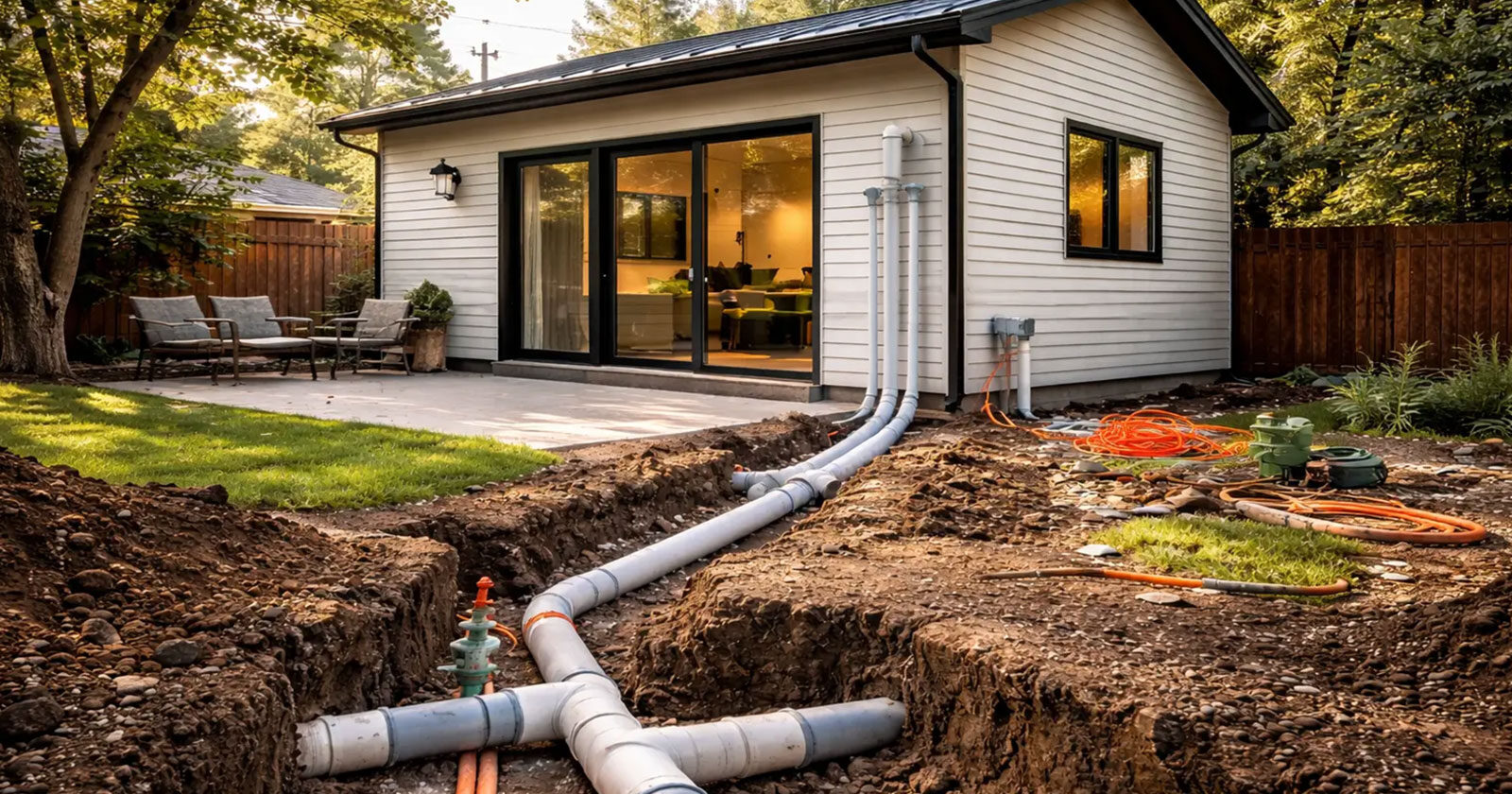
ADU plumbing comes down to a handful of decisions you want settled before the slab is poured: how the new unit’s sewer ties in, whether the old sewer line can carry the extra load, how big the water supply needs to be, whether the unit gets its own meter, and what heats its water. Get those wrong and the fix means cutting concrete. Get them right and the plumbing is the least of your worries.
Plenty of LA homeowners are working through these questions right now. The City of Los Angeles permitted 6,626 ADUs in 2024, the second-highest count on record, according to a Crosstown analysis of building department data. ADUs now make up about 43% of new permitted units in the city. We do remodel and ADU plumbing across LA County, and these are the questions we ask on every one.
Start With the Old Sewer Line
Most ADUs drain into the same sewer lateral as the main house. In a lot of LA neighborhoods, that lateral is clay pipe laid in the 1950s or earlier, sized for one kitchen and a bathroom or two. Add another kitchen, a bathroom and a washer, and an old line with root intrusion or a sagging section starts backing up.
We see this all the time in Rosemead, where homes with added units are running three kitchens through a line built for one. And in Sun Valley, which Crosstown ranks as the top LA neighborhood for ADUs, the larger lots mean the line from the back of the property to the street can run a long way.
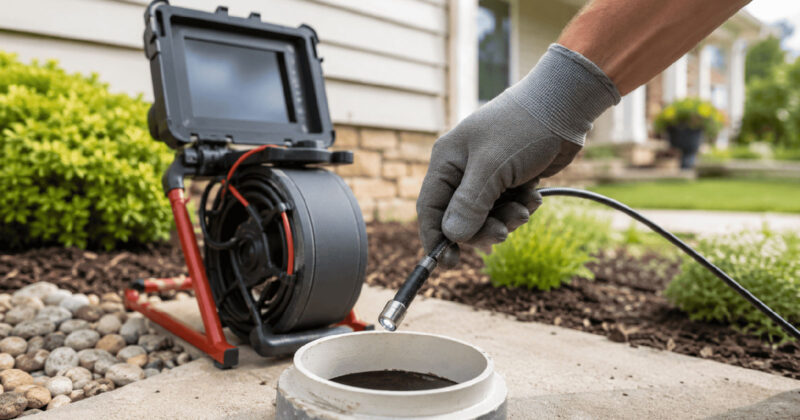
So before anyone draws the sewer on the plans, get the existing line on camera. A camera inspection shows the pipe material, the joints, any roots and any low spots. If a section needs replacing, it’s far cheaper to do it while the yard is already torn up for construction. In the City of LA, LA Sanitation’s sewer lateral rebate program can help cover a camera inspection for eligible owners, while funds last.
Camera the sewer line before the architect finishes the plans, not after the framing goes up. If the line has to be replaced or rerouted, that changes where the ADU’s drain can go.
Getting the Slope Right
Sewage flows by gravity, so the ADU’s drain needs a steady downhill run to where it joins the main line. The California Plumbing Code, section 708.1, calls for horizontal drain pipe to slope at least 1/4 inch per foot. On 4-inch pipe, the building official can approve 1/8 inch per foot where the full slope isn’t practical.
That adds up fast. An ADU at the back of a lot, 80 feet from where it ties in, needs its drain to drop about 20 inches over that run at the standard slope. If the ADU sits lower than the house, or the lot climbs toward the street, the drain may not reach the main line by gravity at all. Then you’re looking at a pump to lift the wastewater, which is one more thing to maintain. That’s a question to answer when the floor height is still on paper.
Water Line Size and a Separate Meter
The new unit also pulls water from the same supply as the house, unless it gets its own meter. More fixtures running at once means more demand on the line from the meter. An older house with a small service line or old galvanized pipe can end up with weak pressure in both units when someone showers in each. A plumber should size the supply for every fixture on the property, not just the new ones.
Whether the city can make you add a separate connection depends on the kind of ADU. Under California Government Code section 66311.5, an ADU built inside the existing space of a house or an existing accessory structure, like a garage conversion, generally can’t be required to have its own new utility connection or pay a related connection fee. A new detached ADU can be required to have its own connection, but the fee has to be proportionate to the unit’s size or its number of drainage fixture units.
Separate meters also make sense for landlords who want each unit to pay its own water bill. Check with your water utility early, because the meter location affects where the supply line runs across the yard.
Picking the Water Heater
An ADU can share the main house’s water heater or get its own. Sharing saves space but means a long hot water run across the yard and a tank sized for both households. A separate heater keeps each unit independent.
In a small ADU, a compact tank or a tankless unit is common. Tankless saves floor space but often needs a larger gas line, and that line has to be planned from the meter. If you’re still deciding, our guide to water heater lifespan in LA explains how LA’s hard water affects whatever you choose. Whatever goes in has to be strapped for earthquakes under California law.
Permits and Inspections
ADU plumbing is permit work, start to finish. The drain, water and gas lines get inspected before the slab is poured and before the walls are closed, so the plumbing schedule has to fit the building inspector’s schedule. In the City of LA, the ADU process runs through LADBS. Other LA County cities have their own building departments and their own ADU rules.
Don’t let anyone talk you into tying the ADU into the sewer or water lines without a permit to save time. An unpermitted connection can hold up the final inspection on the whole unit, and that’s when it becomes expensive.
An ADU Plumbing Checklist for the Plans
Before the plans go to the city, you should be able to answer each of these.
- What shape is the existing sewer line in, and do you have camera footage to prove it?
- Where does the ADU’s drain join the main line, and does it have enough fall to get there?
- Is the water supply from the meter big enough for both units at once?
- Will the ADU get its own water meter, and is the city or utility requiring one?
- Does the ADU get its own water heater, and if it’s gas, how does the gas line reach it?
- Who is pulling the plumbing permit, and when are the inspections?
Bring the Plumber in Early
Hard Hat Rooter and Plumbing handles ADU plumbing across Los Angeles County. We camera the existing sewer, size the lines, pull permits when needed and give you a flat-rate price before work starts. If you’re planning an ADU, call us before the plans are final at (855) 331-7788.