

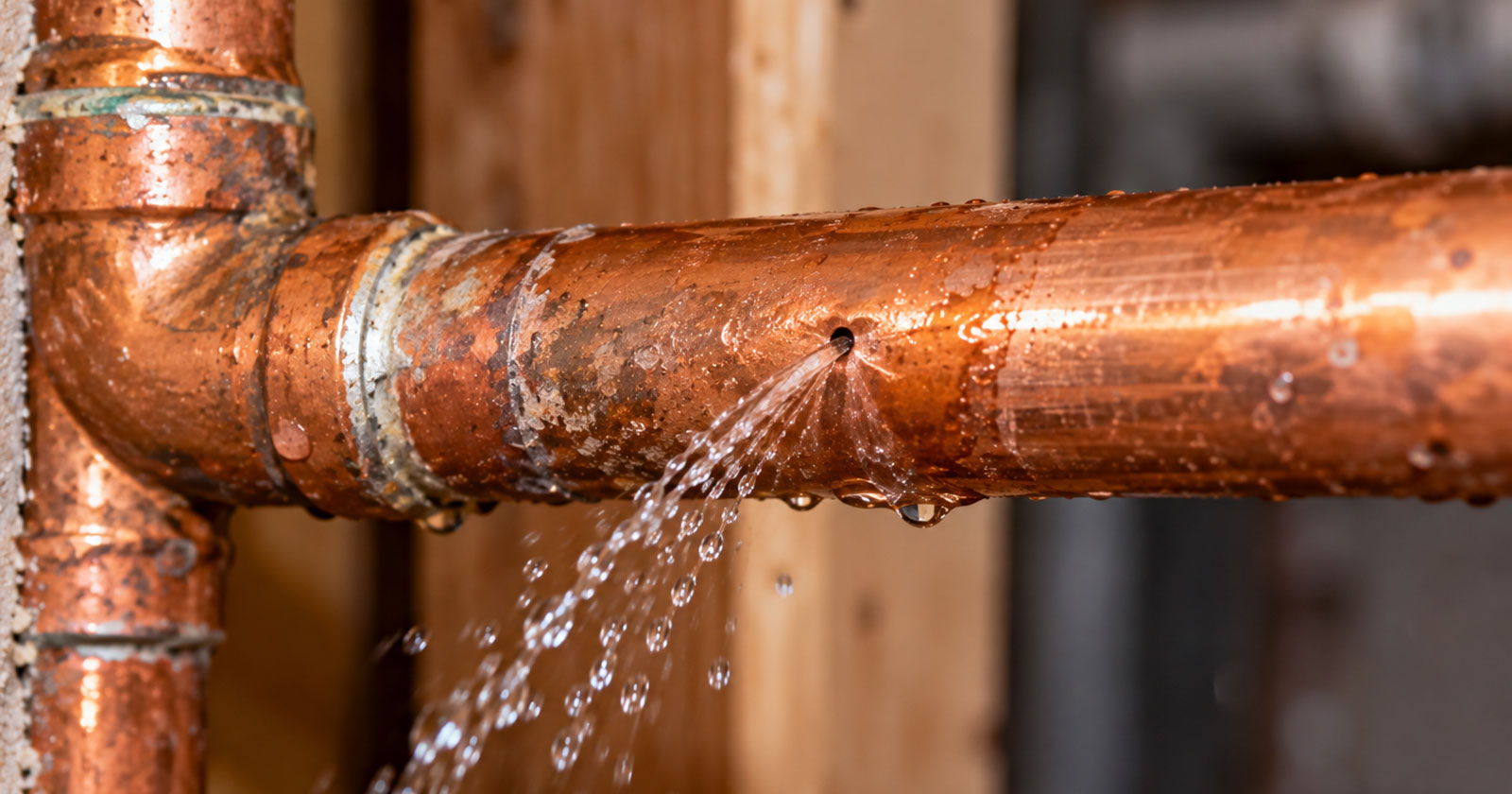
Pinhole leaks in copper pipes come from the inside. Water chemistry, water moving too fast, or both slowly wear tiny pits into the pipe wall until one breaks through. The leak is small, often just a fine spray or a slow drip inside a wall, but it’s a warning. If the conditions that made one pinhole are still there, more are coming, usually in the same run of pipe.
How fast can it happen? In one lab study, fast-moving water wore a pinhole through copper tubing in just 2 months, at a flow speed of 11.2 feet per second. In a house it usually takes years, but the process is the same. Whether you patch it or repipe depends on how many you’ve had, where they are, and what’s causing them. Our leak detection and repiping work starts with exactly those questions.
What Causes Pinhole Leaks in Copper Pipes
Researchers and water utilities point to two main causes.
- Water chemistry. A Virginia Tech study on copper pitting found that certain water, particularly water with high chlorine and high pH, drives pitting that can turn into pinhole leaks. Changing the disinfectant from free chlorine to chloramine, or adding silica, greatly reduced the pitting in that study.
- Velocity. The same study found that faster flow significantly increased pitting in every pipe size tested. At the highest speed tested, a pinhole formed in just two months.
Velocity usually comes back to pressure. A Colorado water district that tracked pinhole leaks in its neighborhood found nearly all of them were caused by erosion from high-velocity water, most often due to excessive pressure, and the most common spot was right after the water line enters the house. That’s where the pipe takes the full force of the incoming water.
Other things play a part too: hot water lines that run constantly on a recirculation pump, sharp turns and fittings where flow churns, and thinner-wall copper (Type M) that simply has less metal to lose.
What That Means in LA
LA water chemistry varies by source and by neighborhood. LADWP has been expanding chloramine disinfection across its system, and the Virginia Tech results suggest chloramine is easier on copper than free chlorine. But that’s one study, on one test water, and it doesn’t make any particular house immune.
Pressure is the factor you can actually control. LADWP says most pressure regulators are set between 50 and 70 psi, and California’s plumbing code calls for a regulator wherever street pressure would exceed 80. Hillside homes in Tujunga and La Crescenta can see high street pressure depending on elevation, and LADWP notes older homes may have no regulator at all. A failed or missing regulator means the copper inside is taking far more than it was designed for.
After any pinhole leak, put a $10 pressure gauge on a hose bib with the house quiet. If it reads over 80 psi, fix the pressure before you fix anything else, or the next pinhole is already on its way.
What to Do When You Find One
A pinhole can spray for days inside a wall before anyone notices. When you find one, move fast.
- Shut off the water. If the leak is on a line to one fixture, close that fixture’s stop valve. Otherwise close the main shutoff.
- Catch what’s coming out with a bucket or towels, and move anything that can’t get wet.
- Take photos of the leak and any damage before cleanup. Your insurance company will want them.
- Call a plumber and say it’s a pinhole in copper. We’ll bring what we need to cut out the section and look inside it.
Open the wall around a hidden leak soon. Wet drywall and framing dry out slowly, and the California Department of Public Health notes that dampness is what mold needs to grow, with leaking pipes a common indoor source.
Signs You Have More Than One
A pinhole is rarely alone. Watch for these signs.
- A second leak within a year or two of the first, especially on the same line
- Green or blue-green spots or crust on exposed copper in the garage, attic or crawl space
- A water bill that creeps up, or a meter leak indicator that moves with every tap off
- Damp drywall, bubbling paint or a musty smell along a wall with pipes in it
- Warm spots on a slab floor, which can mean a pinhole in a hot line under the house
When a Spot Repair Is Fine
A single pinhole is a reasonable spot repair when it’s the first one in years, it’s in a section we can reach without tearing up much, the pipe around it looks sound when we open the wall, and the cause, often high pressure, gets fixed at the same time.
When we cut out a section, we look at the inside. Smooth copper with one isolated pit is a good sign. Pits all along the inside wall mean the rest of that run is on the same path.
When It’s Time to Repipe
Repiping starts to make more sense than chasing leaks when you’ve had two or three pinholes in a short stretch of time, or when they show up in different parts of the house, which points to a whole-system problem rather than one bad spot. It’s the same story when the pipe we cut out is pitted all along the inside, or when the leaks are under the slab and every repair means breaking concrete. And at some point the math turns: each repair costs you drywall, flooring, paint and maybe an insurance claim on top of the plumbing, and those costs add up faster than the plumbing does.
A whole-house repipe in copper or PEX replaces every supply line at once. Most repipes take one to two days. We’ll show you the pipe we removed and walk you through both options with a flat-rate price before anything starts.
Stop Chasing Pinhole Leaks
Hard Hat Rooter and Plumbing finds leaks with electronic and thermal leak detection, repairs them, and repipes homes across Los Angeles County. Call (855) 331-7788.


