
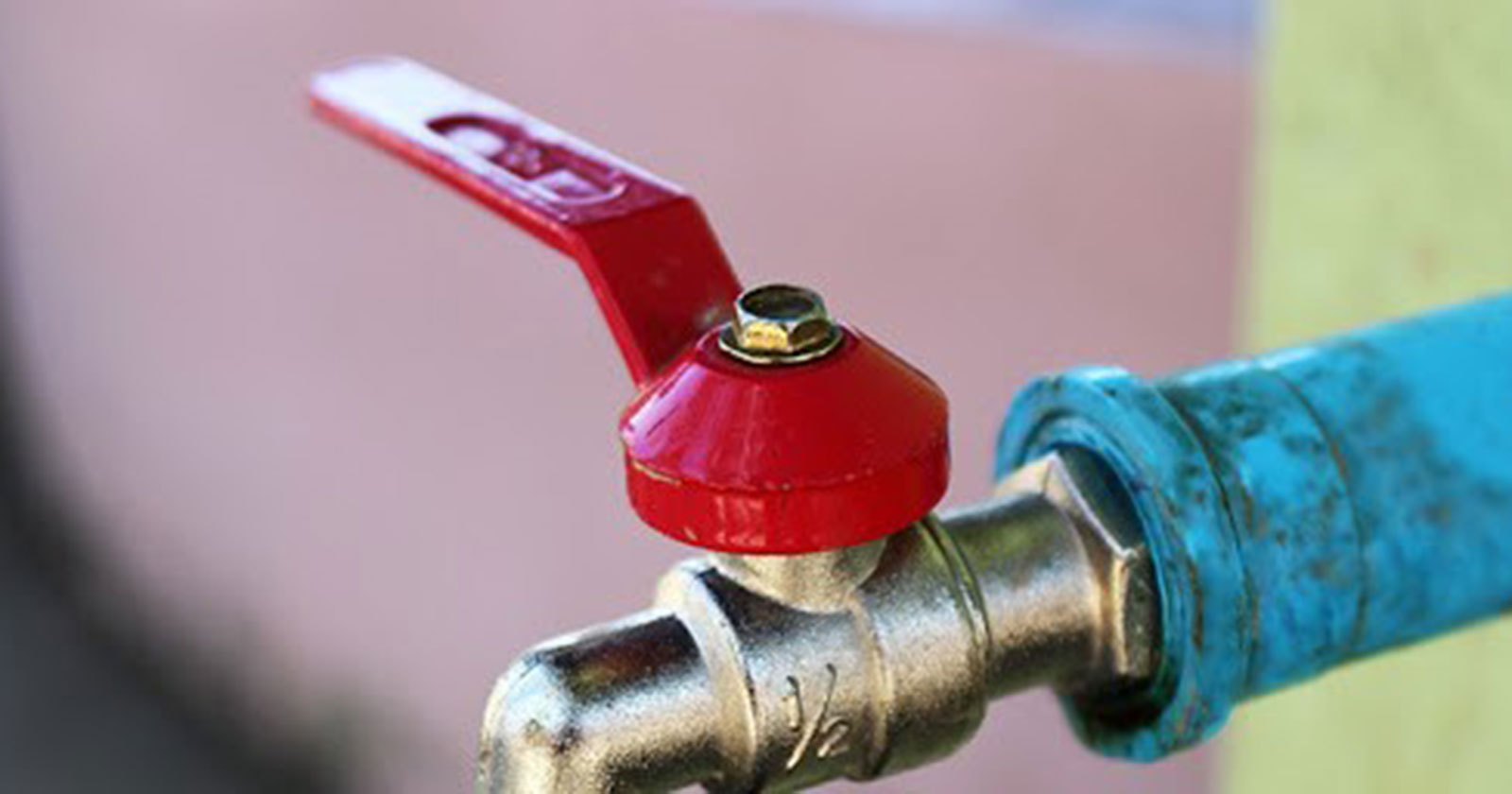
Here’s how to turn off water to your house in an emergency. Find the main shutoff valve where the water line comes into the house, usually on an outside wall near the front hose bib in most LA homes, and turn it clockwise until it stops. A lever-style valve takes a quarter turn (90 degrees), so the handle ends up crosswise to the pipe. Then open a faucet to confirm the water is off.
If water is spraying right now, stop reading after the next section and go turn it off. Then call our 24-hour emergency plumbing line.
Where the Main Shutoff Is in an LA House
In most Los Angeles County homes, the main shutoff is outside, where the water line comes up out of the ground and into the house. Look along the front or side wall facing the street, near a hose bib. It’s often next to a bell-shaped pressure regulator. Where it sits depends on the kind of house.
- 1920s to 1940s bungalows and Craftsman homes. Usually on the outside wall facing the street. Some older raised houses have it in the crawl space, just inside the access door.
- Valley ranch homes on a slab. Usually on an outside wall near the front hose bib, sometimes in the garage near the water heater.
- Hillside homes. The line may come in from below or above the house depending on where the meter is. In La Cañada Flintridge and other foothill neighborhoods, follow the line from the meter box toward the house.
- Condos and apartments. Your unit may have its own valve in the water heater closet, behind an access panel, or under the kitchen sink. The building’s main belongs to the HOA or the owner. In West Hollywood’s courtyard buildings, it’s often in a utility room or near the street.
Can’t find it in two minutes? Go to the meter.
Using the Valve at the Meter
The meter is usually in a concrete box near the curb. Many meter boxes have a valve on the street side of the meter, and turning it shuts off water to the whole property. It often needs a meter key, a long T-shaped tool sold at hardware stores, and it can be very stiff.
That valve belongs to the water utility, and rules on using it vary. Garden Grove’s public works department, for example, says only city staff should operate its shutoff valves except in an extreme emergency, and whoever damages one pays for the repair. In a real emergency with water pouring into the house, most people use it. Otherwise, call your utility.
So the house valve is the one to know. It’s yours, and it’s built to be turned.
What to Do After the Water Is Off
Once the main is closed, you’ve stopped the damage from getting worse. Now a few quick steps.
- Open a faucet at the lowest point, like a hose bib or a bathtub, to drain what’s left in the pipes and take pressure off the break.
- Stay away from water near outlets, power strips or appliances. If water is reaching anything electrical, keep out of it and call for help.
- Take photos of the leak and any damage before you clean up. Your insurance company will want them.
- Move what you can out of the water: rugs, electronics, boxes.
- Call a plumber. Tell them the water is off. It changes how fast the job needs to happen.
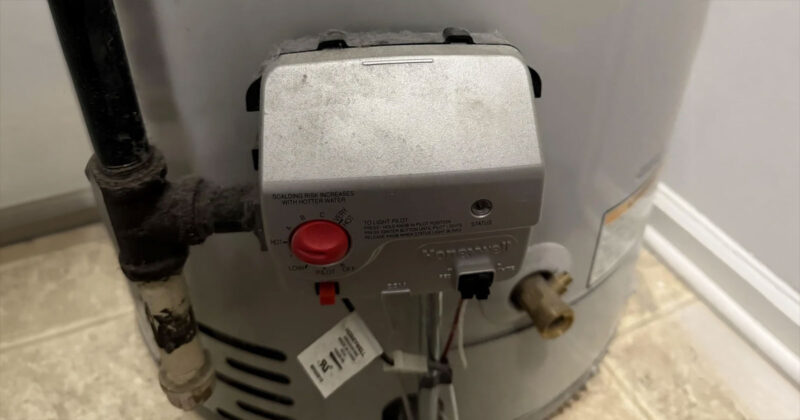
If you have a gas water heater and the plumber will be draining the lines, set it to “vacation” or “pilot” so it isn’t heating an empty system. Leave everything else on the heater to the plumber.
Find your main shutoff today, tie a bright tag on it, and turn it off and back on once or twice a year. A valve that never moves is the one that’s frozen solid the day you need it.
When the Valve Won’t Turn
A stuck valve is common, especially an old gate valve with a round wheel handle. Try steady pressure by hand, then a little more with a wrench on the handle. Don’t use a long cheater bar. An old valve can snap off at the stem, and then water runs with no way to stop it at the house.
If it won’t move, go to the meter. And once the emergency is over, have the stuck valve replaced with a quarter-turn ball valve. Seattle’s emergency management office gives the same advice for earthquake prep: make sure the house valve shuts off completely, because one that’s rusted open or only closes partway is no help, and replace it if needed. In an earthquake, closing the house valve also keeps the water in your water heater and toilet tanks from draining away.
When to Call a Plumber
Call as soon as the water is off, or right away if you can’t get it off. Hard Hat Rooter and Plumbing answers 24 hours a day, 7 days a week, with a live person on the phone and a flat-rate price before any work starts. We can stop the leak, fix the break and replace a stuck shutoff while we’re there. Call (855) 331-7788.