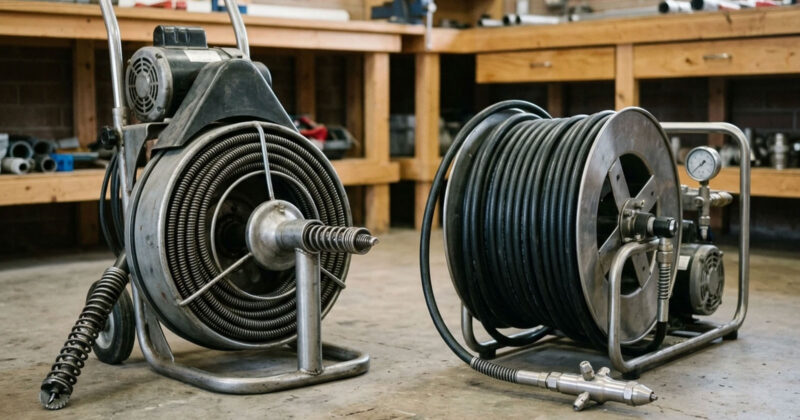
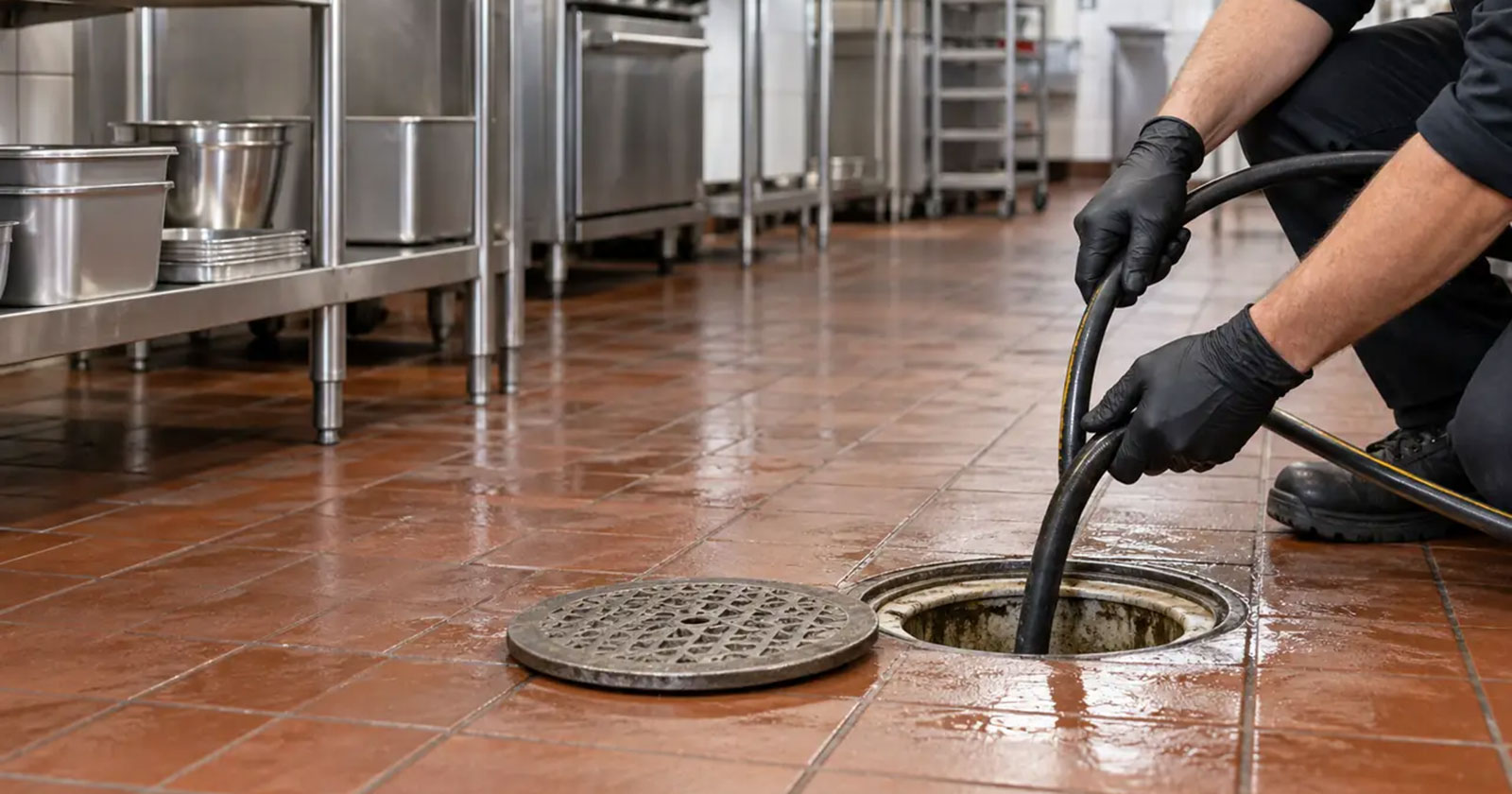
Restaurant grease line cleaning means hydro jetting the drain lines between the kitchen and the grease interceptor, and from the interceptor to the sewer, often enough that grease never builds up to the point of a backup. For a busy kitchen with fryers, woks or grills, that’s often every three to six months. A lighter kitchen may go a year. The interceptor itself gets pumped on its own schedule. Both have to happen, because a clean interceptor can’t help if the line feeding it is half full of grease.
Grease is the leading cause of backups in commercial kitchens, and it’s a big reason for sewer trouble citywide. LA Sanitation says over 50% of sewer backups are caused by tree roots and by fats, oils and grease. Our drain cleaning and hydro jetting crews see the kitchen side of that number every week.
Grease Trap vs Grease Interceptor
People use the two names interchangeably, but they’re different devices. LA County Public Works’ restaurant guidelines define them this way.
- Grease trap. A small device, 25 to 75 gallons, usually under or next to a sink. Single compartment with baffles.
- Grease interceptor. A large precast concrete tank, 750 gallons or more, with two or more compartments, usually buried outside or under a parking area.
Under those guidelines, a new interceptor is sized by drainage fixture units from the California Plumbing Code, with a minimum of 750 gallons for restaurants in most cases.
Who Has to Have One
The County guidelines apply in unincorporated areas and cities that contract with the County for industrial waste control. Under them, a pretreatment device such as a grease interceptor is required for food service establishments that put grease into the sewer in amounts that could cause stoppages. The criteria include seating for 150 or more, cooking on grills, fryers, woks or barbecues, a lot of takeout or drive-thru volume, and locations in areas with known grease problems. West Hollywood is one of the areas the County names.
The City of Los Angeles, which covers Downtown LA, and cities like Burbank run their own sewer systems and set their own rules. If you’re opening or remodeling a kitchen, ask the city’s sewer or industrial waste office what applies to your address before you build.
Restaurant Grease Line Cleaning by Kitchen Volume
There’s no single schedule that fits every kitchen. Here’s the starting point we use, then we adjust based on what the camera shows at each visit.
- High-volume, grease-heavy kitchens (fryers, woks, grills, long hours): jet the lines every 3 months.
- Moderate kitchens (full menu, some frying): every 6 months.
- Light kitchens (cafés, bakeries, mostly prep): once a year.
If the camera shows heavy buildup at three months, the schedule tightens. If the line is nearly clean at six, it can stretch. The footage is the record of why.
Book line jetting for after close or before open, never during service. A scheduled 6 a.m. jetting costs far less than a backup in the middle of Friday dinner, with the health inspector’s rules on top of it.
What a Cleaning Visit Looks Like
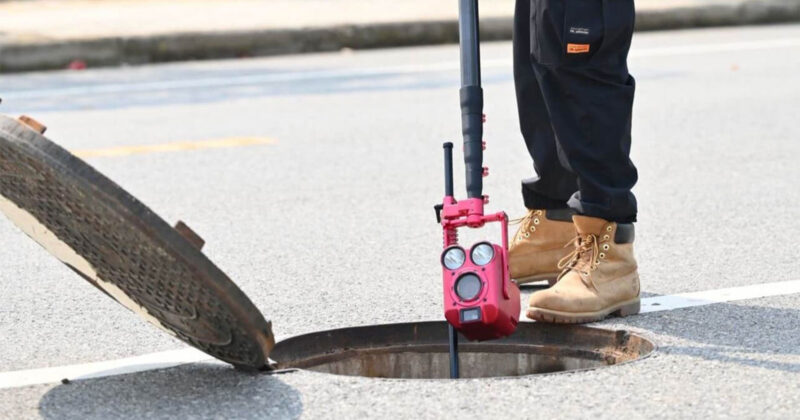
A scheduled visit starts at the clean-out closest to the kitchen. We jet the line from there toward the interceptor, then run the camera back through to check the walls are clear and look for anything else: a sagging section that holds grease, a cracked joint, roots on the outlet side. If there’s a clean-out past the interceptor, we jet and check that run to the sewer too.
You get the footage and a short report after every visit. Over a few visits, that record shows how fast your kitchen builds grease, which is how the schedule gets set by facts rather than guesswork. If an inspector from your sewer agency ever asks what you’re doing about grease, it’s also the paperwork that answers the question.
Signs your line can’t wait for the next scheduled visit: floor sinks that drain slowly or gurgle, a sewer smell near the dish area, water backing up into the mop sink, or grease visible in a clean-out when it’s opened. Any of those means the line is close to full.
Why Jetting Beats Snaking for Grease
A snake punches a hole through a grease clog and gets the water moving again. The grease coating the rest of the pipe stays put, and it catches the next load of grease right away. That’s why a snaked kitchen line often backs up again in weeks.
Hydro jetting scours the whole inside of the pipe with high-pressure water, so the line goes back to close to its full opening. On older cast iron kitchen lines, which have rough, scaled walls that grab grease, that difference matters even more.
Daily Habits That Keep the Line Clean
CleanLA, the County’s FOG program, notes that fats, oils and grease build up in sewer lines, restrict flow and cause blockages and overflows. The County guidelines add that collected grease can’t go into any drain, street, gutter, storm drain or sewer, and that a garbage disposal generally can’t discharge into a grease interceptor. Day to day, that means a few habits.
- Scrape plates and pans into the trash before they hit the dish sink
- Use strainers in every floor sink and prep sink
- Collect fryer oil in a rendering bin for pickup, never down a drain
- Check with your sewer agency before using any bacteria or enzyme product. The County guidelines require prior approval for them.
The same rules apply at home on a smaller scale. Our article on a kitchen drain clogged after Thanksgiving covers what grease does in a house line.
Keep Your Kitchen Running
Hard Hat Rooter and Plumbing jets and cameras commercial and restaurant lines across Los Angeles County, on a schedule or in an emergency, 24 hours a day. Interceptor pumping is done by licensed grease haulers, and we work alongside them. Call (855) 331-7788.